Dental care for dogs fails the same way most maintenance fails: it depends on remembering, and remembering loses to a busy week. A calendar works better. Plaque forms on teeth every day and hardens into tartar within a day or two, gum inflammation builds over months, and the veterinarian's full picture comes once a year. Each timescale has its own job, and laying them out turns dental care from a worry into a routine for Fort Mill households.
One boundary runs through the whole calendar: brushing and home care handle soft plaque, while hardened tartar and anything below the gumline belong to veterinary dentistry. Groomers sit in the middle, brushing teeth at appointments and reporting what they see.
The calendar
| Interval | The job | Details that matter |
|---|---|---|
| Daily, or near it | Brush the teeth | Dog toothpaste and a soft brush or finger brush, about a minute, focusing on the outer surfaces and the gumline where plaque collects fastest. |
| Weekly | Lift-the-lip look during brushing or grooming | Scan for new yellow or brown buildup, a red line at the gums, broken teeth, or anything growing in the mouth. |
| Monthly | A deliberate mouth check in good light | Compare with last month. Note breath changes, one-sided chewing, or dropping food, which are pain signals, not quirks. |
| Every grooming appointment | Teeth brushed and observed at the salon | Ask what the groomer saw. Regular observation between vet visits is how early tartar gets caught while it is still a small problem. |
| Seasonally, spring and fall | Reset the supplies | Replace the worn toothbrush, check the toothpaste supply, and restart the routine firmly if summer or holidays let it slide. |
| Yearly | Veterinary exam with an oral assessment | The vet judges tartar, gum health, and whether a professional cleaning under anesthesia is due. Small breeds and seniors often need closer intervals. |
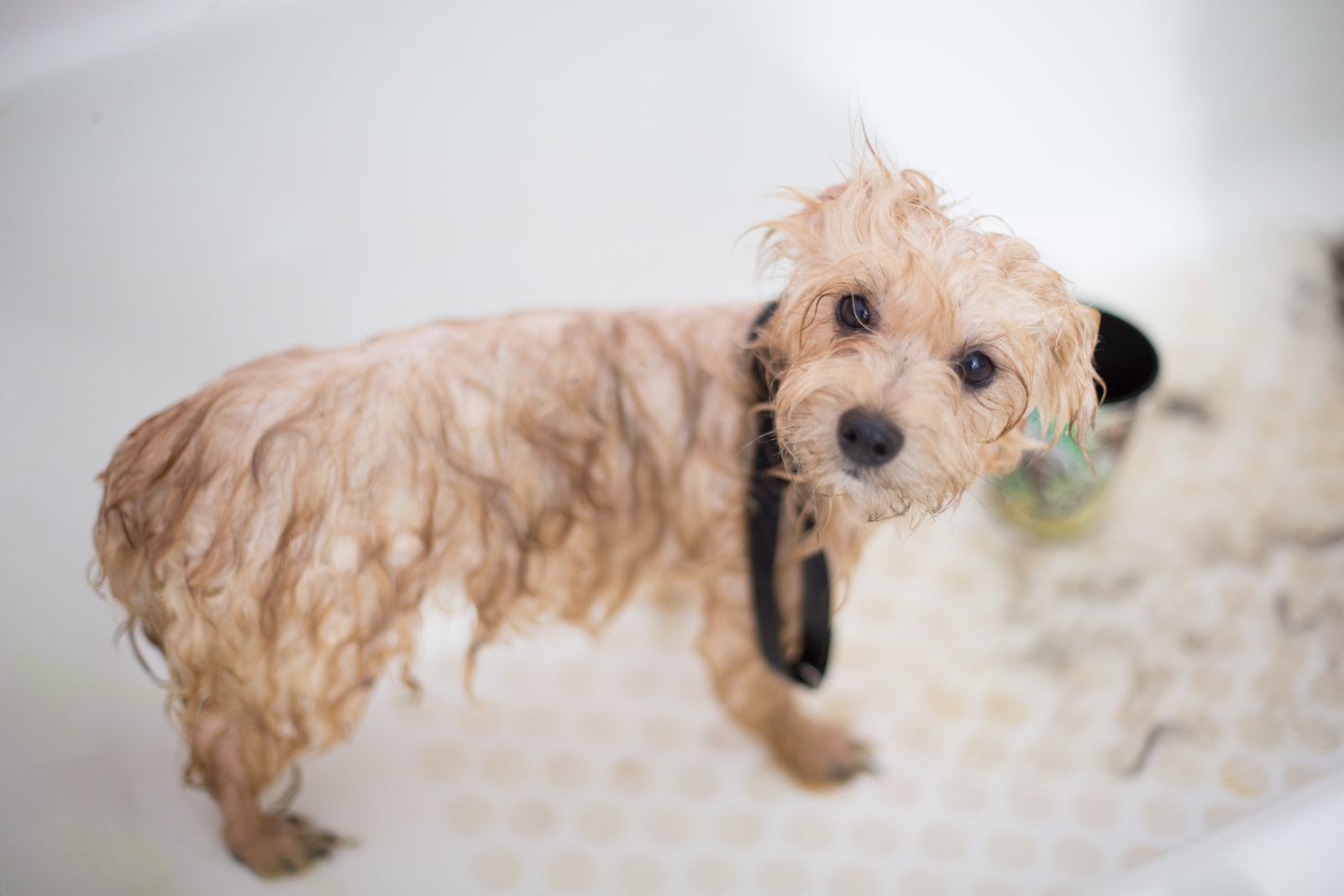
Starting the daily habit without a fight
Most dogs accept brushing when it is built in stages over two weeks. Start by letting the dog lick dog toothpaste off your finger for a few days, then rub a few front teeth with a paste-covered finger, then graduate to a finger brush, then a soft brush. Keep sessions under a minute at first and end each with something the dog likes. If your dog already has visible tartar, start anyway: brushing will not remove the crust, but it slows new plaque and improves the gums around it while you schedule the vet conversation.
What the professionals on the calendar can and cannot do
A groomer can brush teeth, use dental wipes, and tell you what the mouth looks like compared with last visit. At Biscuits & Bubbles Pet Salon in Fort Mill, teeth and ear cleaning are part of the grooming menu, which makes appointments a useful checkpoint on the calendar. A groomer cannot scale tartar, probe under the gumline, or diagnose dental disease, and any service promising deep cleaning without anesthesia is only polishing the visible surface while the disease underneath continues. The veterinarian's cleaning, done under anesthesia, is the one intervention that addresses the whole tooth, including the part below the gumline where gum disease actually lives.

The point of the schedule
Kept loosely, this calendar does two things. It keeps soft plaque from ever becoming the hard problem, and it guarantees that when tartar or gum trouble does develop, somebody qualified sees it within weeks rather than years. Dogs hide mouth pain well and keep eating through discomfort that would send a person to a dentist the same day, so the calendar is not fussiness. In Fort Mill terms, treat teeth like the HVAC filter: small regular attention, one professional look a year, and no surprises.
Where chews and additives fit
Dental chews, water additives, and dental diets all sit in the supporting cast of this calendar, and they are fine there. A chew with a veterinary dental seal has at least been tested for plaque or tartar reduction, and chewing does scrape the back teeth that brushes reach poorly. None of them reaches the gumline the way a brush does, and none removes tartar once formed, so treat them as a helpful extra on the days brushing does not happen rather than as the plan itself.
Common questions
Is brushing three times a week worth doing if daily fails?
Yes. Plaque hardens in about one to two days, so even an every-other-day rhythm removes much of it while it is still soft. Consistency at a lower frequency beats a perfect week followed by a skipped month.
What toothpaste should I use?
One made for dogs. Human toothpaste can contain ingredients dogs should not swallow, and dogs cannot spit. Dog pastes are flavored to make the routine easier to sell.
When does my dog need a professional dental cleaning?
When your veterinarian finds tartar buildup, gum inflammation, or loose teeth at an exam. There is no fixed age; small breeds often need one earlier than large breeds.
Photos in this guide are representative stock images.
← All guides from Biscuits & Bubbles Pet Salon← Back to Biscuits & Bubbles Pet Salon