Cats are supposed to handle their own grooming, and for years most of them do. Then the equation changes: the cat gains weight and cannot reach its back, or arthritis makes twisting painful, or a long coat grows in thicker than the tongue can manage. What follows is not sudden. It is a slow sequence that Fort Mill groomers see constantly, a few soft tangles, then mats, then a coat that has effectively become a felted shell, and at every stage the fix is a little harder and the cat's experience a little worse.
This is what waiting actually does, stage by stage, and where the off-ramps are.
The stages of a coat left alone
Stage one is loose tangles, usually behind the ears, in the armpits, along the belly, and at the back where a heavy cat cannot reach. These comb out in minutes with a steel comb and a patient hand. Stage two is real mats: clumps that have tightened with shed hair and skin oil, pulling on the skin with every movement. Owners often miss stage two entirely because the top of the coat looks smooth while the mats live underneath, against the body. Stage three is pelting, where mats link into a continuous sheet. Under a pelt, skin cannot breathe, moisture collects, and sores and infections can develop out of sight. A pelted cat is also a cat in constant low-grade discomfort, because the pelt tugs whenever the cat moves, stretches, or is picked up.
Why the fix gets harder
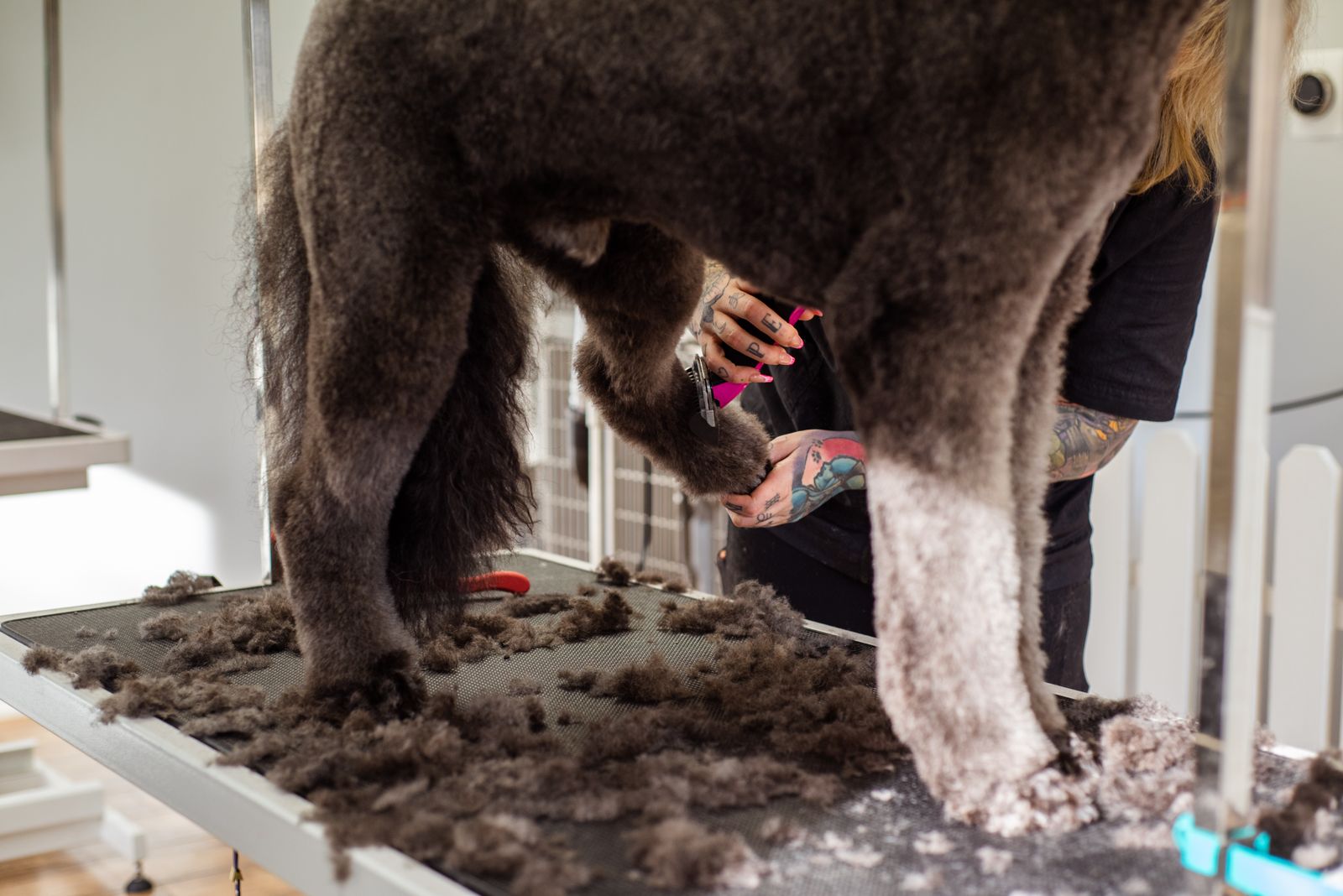
A stage-one tangle is a home job. A stage-two mat is a groomer's job with clippers, because mats pull skin up into themselves and scissors near them are one of the most common causes of grooming cuts, in cats worst of all since feline skin is thin and tears easily. A stage-three pelt is a slow, careful shave-down, sometimes best done at a veterinary clinic where sedation is available if the cat's stress or the skin underneath demands it. Note the pattern: the animal's stress, the appointment length, and the risk all rise with waiting, while nothing about the problem improves on its own. Mats do not loosen. They only tighten, because every day the cat sheds more hair into them.
The lion cut enters here, not as a fashion statement but as the usual shape of the rescue groom: body clipped short to remove the damage, with the mane, lower legs, and tail tuft left where the coat is healthy. Owners sometimes feel guilty choosing it. They should not. For a matted cat, a clip is immediate relief, and the coat grows back while a new brushing routine gets established.
The check that prevents all of it
Run a steel comb, not just your hands, through the coat weekly, down to the skin, in the friction zones. Your hands will glide over mats forming underneath; the comb tells the truth. Weigh the cat monthly too, since the classic matting patient is the indoor cat quietly gaining past the point of reaching its own back. And respect the last stat above when reaching for products: dog flea treatments, especially those with permethrin, are genuinely dangerous to cats. Bathing a cat, when needed, means cat-specific shampoo, lukewarm water, and complete drying.
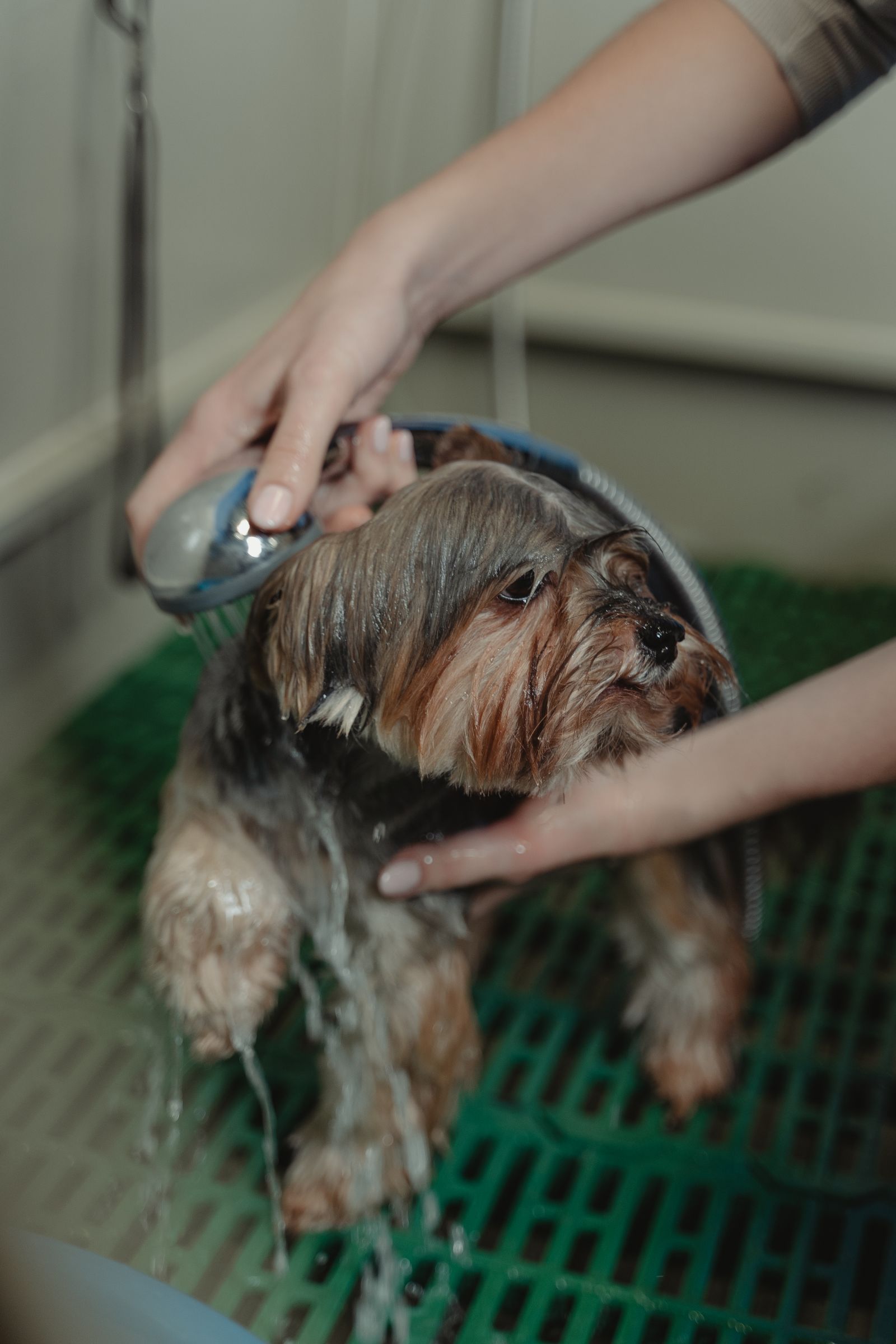
If you are not sure which stage your cat's coat is in, that is a fine reason to ask. Salons in Fort Mill, including Biscuits & Bubbles Pet Salon, would rather assess a coat early and comb out a few tangles than meet the same cat in six months for a pelt removal. The cheapest, kindest version of every grooming problem is the early one. Cats are stoic about discomfort, so the comb check is you noticing on their behalf.
Common questions
How do I know if my cat has mats under the top coat?
Comb down to the skin in the armpits, belly, and behind the ears. Mats feel like firm lumps or a thickened layer the comb cannot pass through, even when the surface looks fine.
Will a mat ever fall out or loosen on its own?
No. Mats tighten as the cat sheds hair into them. They either get combed out early, clipped out later, or become a pelt.
Is the lion cut the only fix for a matted cat?
For heavy matting, yes, clipping is the humane option. Isolated small mats can sometimes be clipped individually, leaving the rest of the coat long.
Photos in this guide are representative stock images.
← All guides from Biscuits & Bubbles Pet Salon← Back to Biscuits & Bubbles Pet Salon