Plenty of Fort Mill dogs get brushed the way most people brush them the first time: a few swipes over the back with whatever brush came home from the store, a dog that squirms away in two minutes, and a coat that still mats at the groomer's table. The gap between that and a real routine is small. It is the right tool, a layer-by-layer technique, and sessions short enough that the dog never learns to hate them.
This walkthrough assumes you have never done it properly. By the end you will have a complete first session and a schedule for keeping it going.
First, the tools, by coat
Short, smooth coats need a rubber curry brush or soft bristle brush and nothing fancier. Curly, wavy, and long coats need a slicker brush, the rectangular one with fine bent pins, plus a steel comb. Double coats need the same slicker and comb pair. Silky, fragile coats do better with a pin brush than a slicker. The comb is the non-negotiable item in every kit: it is how you verify the work. One more rule for the whole topic: never dry-brush a long or curly coat that is already tangled without patience, and never force a brush through resistance. Resistance is information.
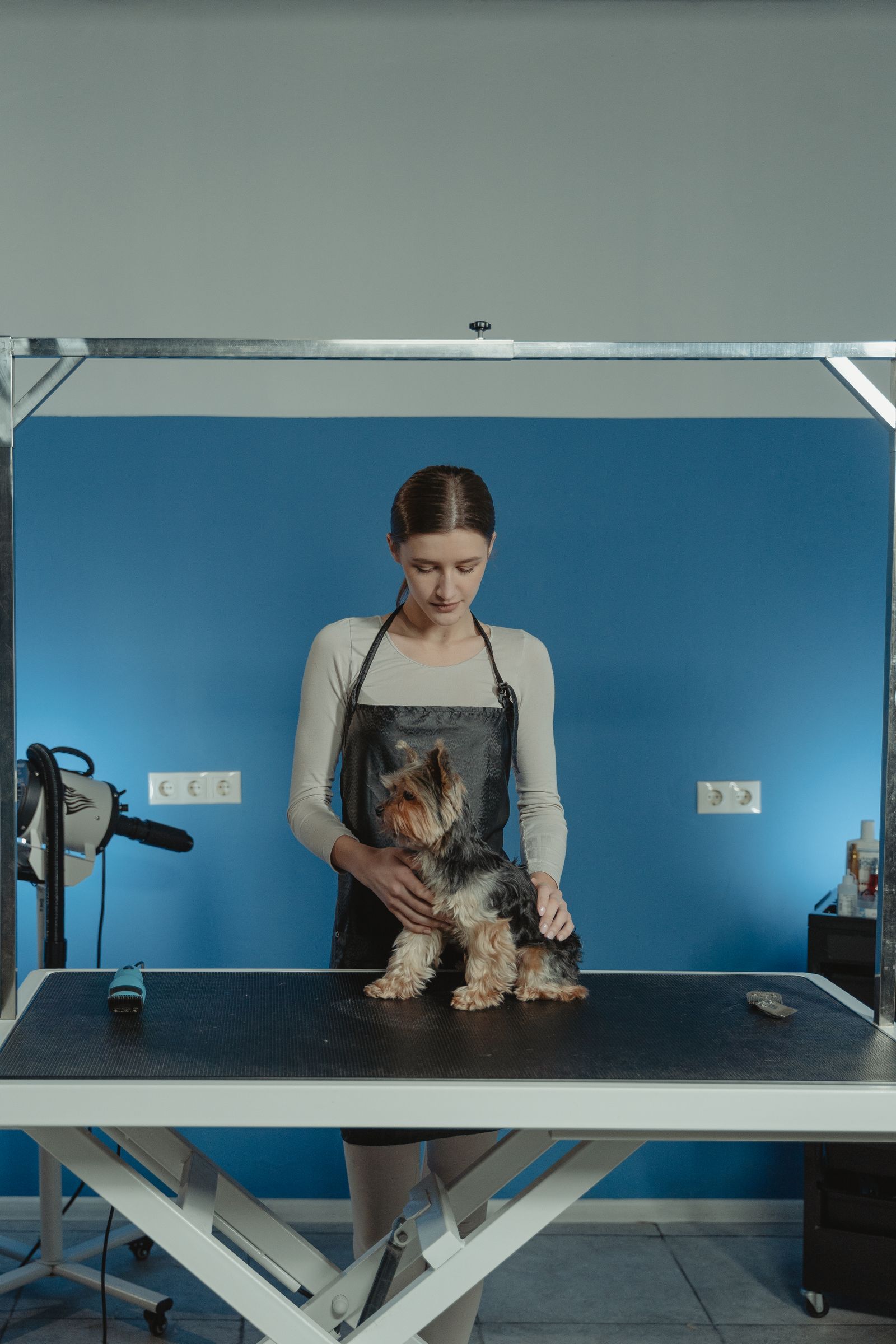
The first session, step by step
- Set the scene. Choose a non-slip spot, good light, and a calm time, ideally after exercise. Have treats ready and plan on five minutes, not twenty.
- Let the dog inspect the tools. A sniff and a treat pairs the brush with good things before it ever touches the coat.
- Begin on the back and sides. Short, light strokes in the direction of growth. These are the areas dogs care about least, and they let you learn the pressure: enough to reach through the coat, never scraping skin.
- Line-brush the longer areas. With one hand, lift a section of coat; with the other, brush the layer beneath from the skin outward. Move across the dog in lines so no under-layer gets skipped. This is the technique that separates real brushing from surface smoothing.
- Run the comb test. Draw the steel comb through each finished section, down to the skin. Glide means done. A snag means a tangle: hold its base so it cannot pull the skin, and tease it apart with the comb's end teeth, working from the tip of the tangle toward the skin.
- Check the four friction zones. Behind the ears, the armpits, the collar line, and the belly. These mat first in nearly every breed, so they get a comb check every session, even a short one.
- Finish while it is still going well. Last treat, tools away. A dog that leaves every session relaxed will come back for the next one, and regularity is the entire strategy.
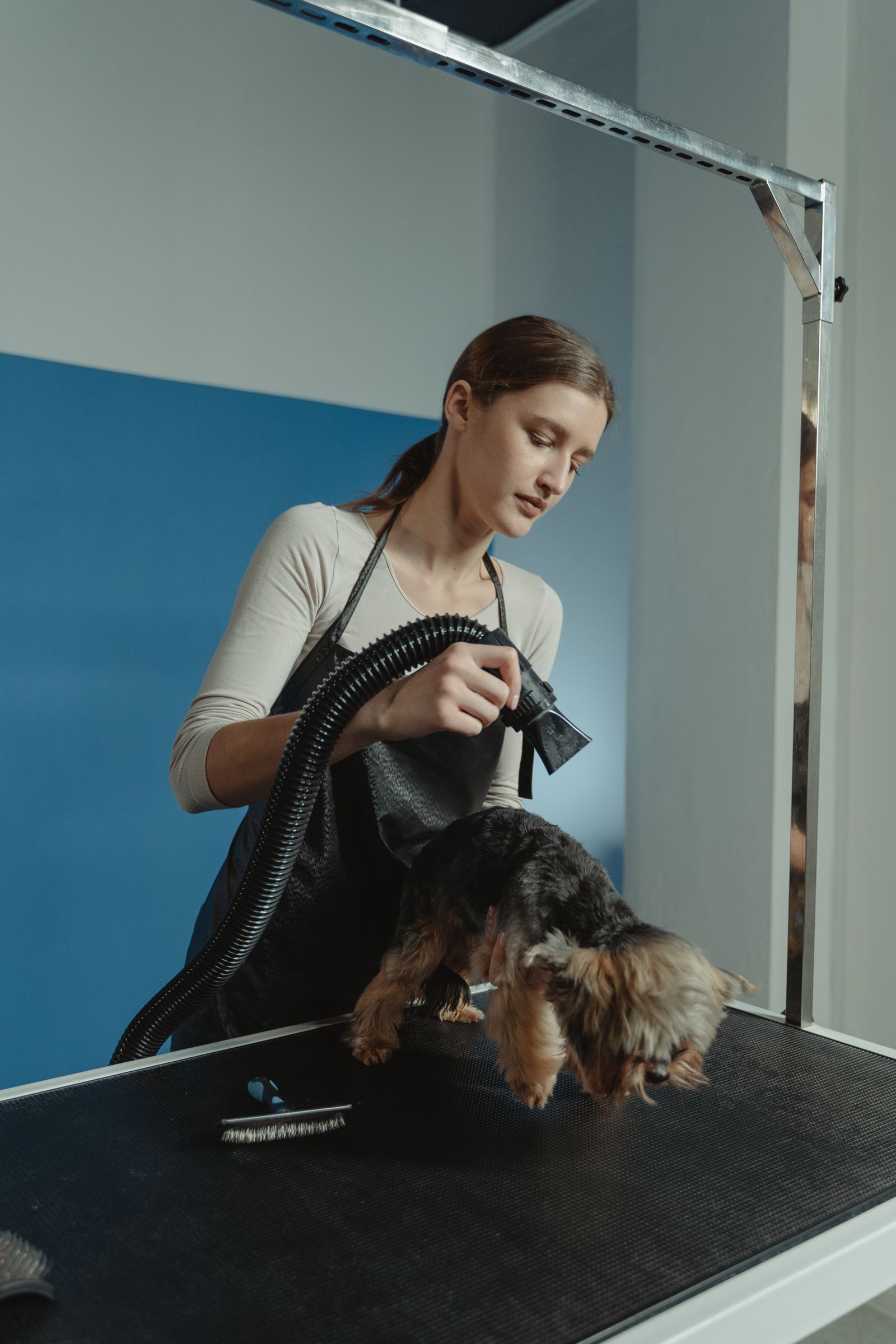
The schedule to put on the fridge
Curly and long coats: a short session every two to three days. Double coats: weekly, doubling up during the spring and fall shed. Smooth coats: weekly for a few minutes. If a session gets skipped, do not compensate with a marathon; just resume, and deal with any new tangles at pea size, when they are still a ten-second problem. Mats that are tight to the skin, widespread, or make the dog flinch are not a home project. Clippers at the salon, such as Biscuits & Bubbles Pet Salon in Fort Mill, remove them without pain or skin tears, and no coat is worth a scissor accident near the skin.
Two closing comforts for beginners. First, every groomer would rather teach you this routine than shave down a matted dog, so ask questions at appointments. Second, your first sessions will be clumsy and short, and that is fine. The dogs that arrive at the salon tangle-free are not the ones with perfect owners. They are the ones with a brush, a comb, and five regular minutes.
Common questions
What if my dog will not sit still for brushing?
Shorten the session to two minutes, brush after exercise, and build up over weeks. A lick mat with a smear of something tasty buys a beginner several calm minutes.
Brushing seems to make loose hair worse. Why?
You are pulling out hair that was ready to shed, which is the point. It lands in the brush now instead of across the house over the following week.
Should I brush before or after a bath?
Before, always, for tangled coats. Water tightens tangles and mats, so brush and comb out first, then bathe, then brush again lightly once fully dry.
Photos in this guide are representative stock images.
← All guides from Biscuits & Bubbles Pet Salon← Back to Biscuits & Bubbles Pet Salon